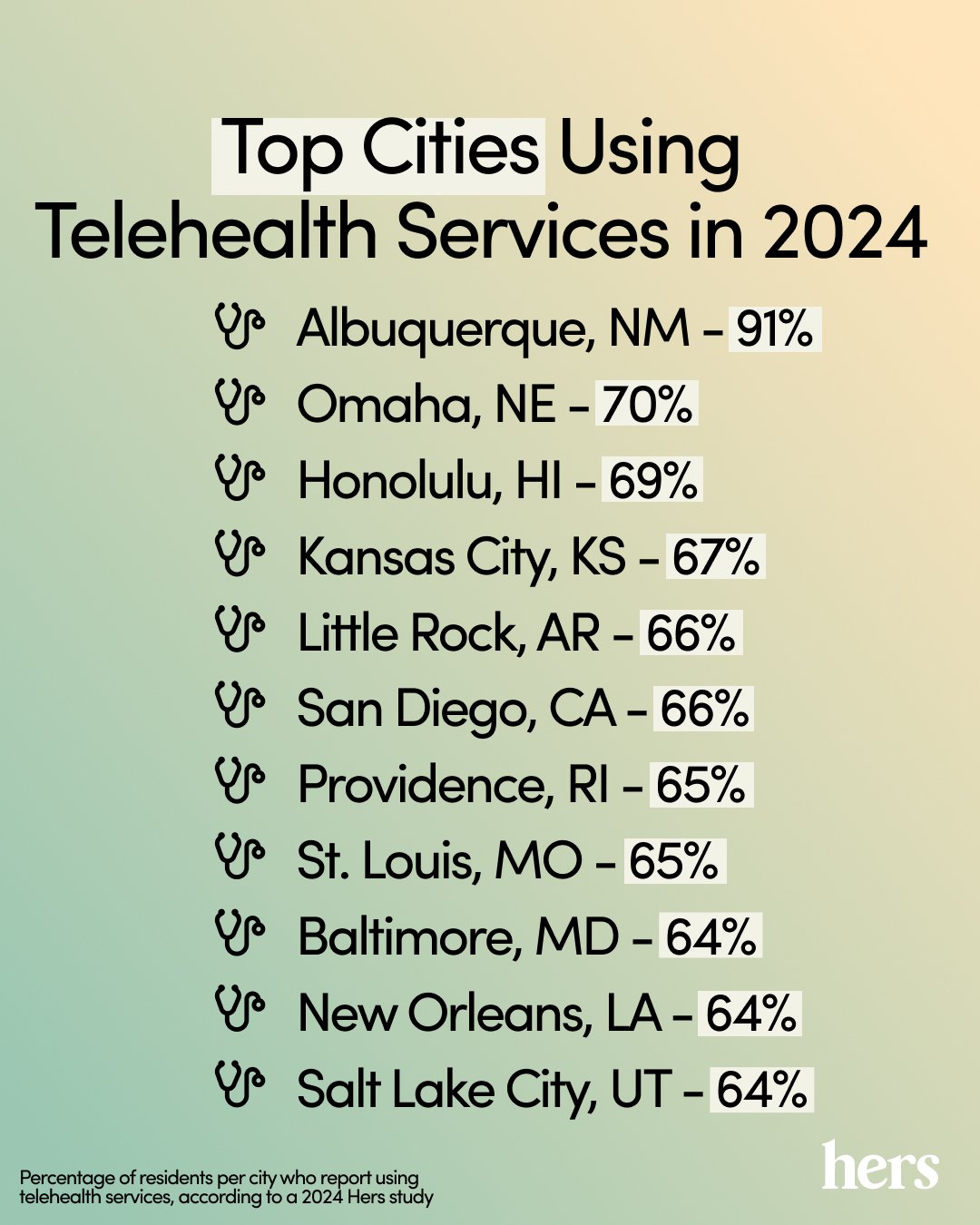


Canva Tech savvy and away from home, college students are tapping into telehealth services rather than having to rely solely on student health centers. Telehealth has become a back-to-school basic for the collegiate set, 71% of whom report using a telehealth service, as compared to 54% of the general population, according to a 2024 study conducted by Hers. What’s the result of more college students turning to telehealth? 71% of college students also self-identify as “healthy” as compared to 60% of Americans overall, and 31% report their health is “amazing” (a 5 on a 5-point scale) as compared to 21% of the general population. College students were the most likely of any demographic to say their health has changed for the better in the past three years (47% vs. 37% of the general population). College students today were in their formative teen years during the pandemic when telehealth services mainstreamed across America (with telemental health care increasing 10x during the pandemic). For many of them, telehealth care is health care, so it makes sense that telehealth services are a natural choice for them when they leave their hometowns, and primary care physicians, to go to school. Gen Z Is More Likely to Access Telehealth Services For Mental Health Care College students are much more likely than the general population to tap into telehealth services for their mental health needs. 66% have gotten a prescription for their mental health from a telehealth company compared to 55% of the general population. Furthermore, 68% of college students report being highly emotionally stable as compared to 59% of Americans overall, and 43% report their mental health has improved over the past three years vs. 38% of total respondents. Research also shows that online mental health interventions, which include web-based self-help, apps, and chatbots, can be effective in managing diverse mental health conditions (e.g., depression, anxiety, stress, and insomnia) among youth. For Gen Z, a generation known for advocating for mental health awareness, virtual health care as a way to make mental health treatment more accessible and less stigmatizing. Underscoring their interest in mental health, 47% of college students have proactively educated themselves about mental health compared to 35% of Americans overall. They’re talking more about things like anxiety and depression and sharing their experiences on social media. Weight loss products also rank high on college students’ telehealth lists; 64% have purchased a weight loss product from a telehealth company (maybe a weight loss medication, weight loss injections, or weight loss supplement) vs. 53% of the general population. And then of course there’s sex. Sexual health is the top health care category students’ are utilizing from telehealth companies. College students aren’t the only group leading the telehealth revolution. Time-strapped parents are also telehealth leaders: 69% of working parents reported using telehealth services, compared to 54% of total respondents. 50 Cities Ranked By Usage of Telehealth Services
Trust in telehealth is on the rise: Nearly 3/4 of Gen Z report using a telehealth service