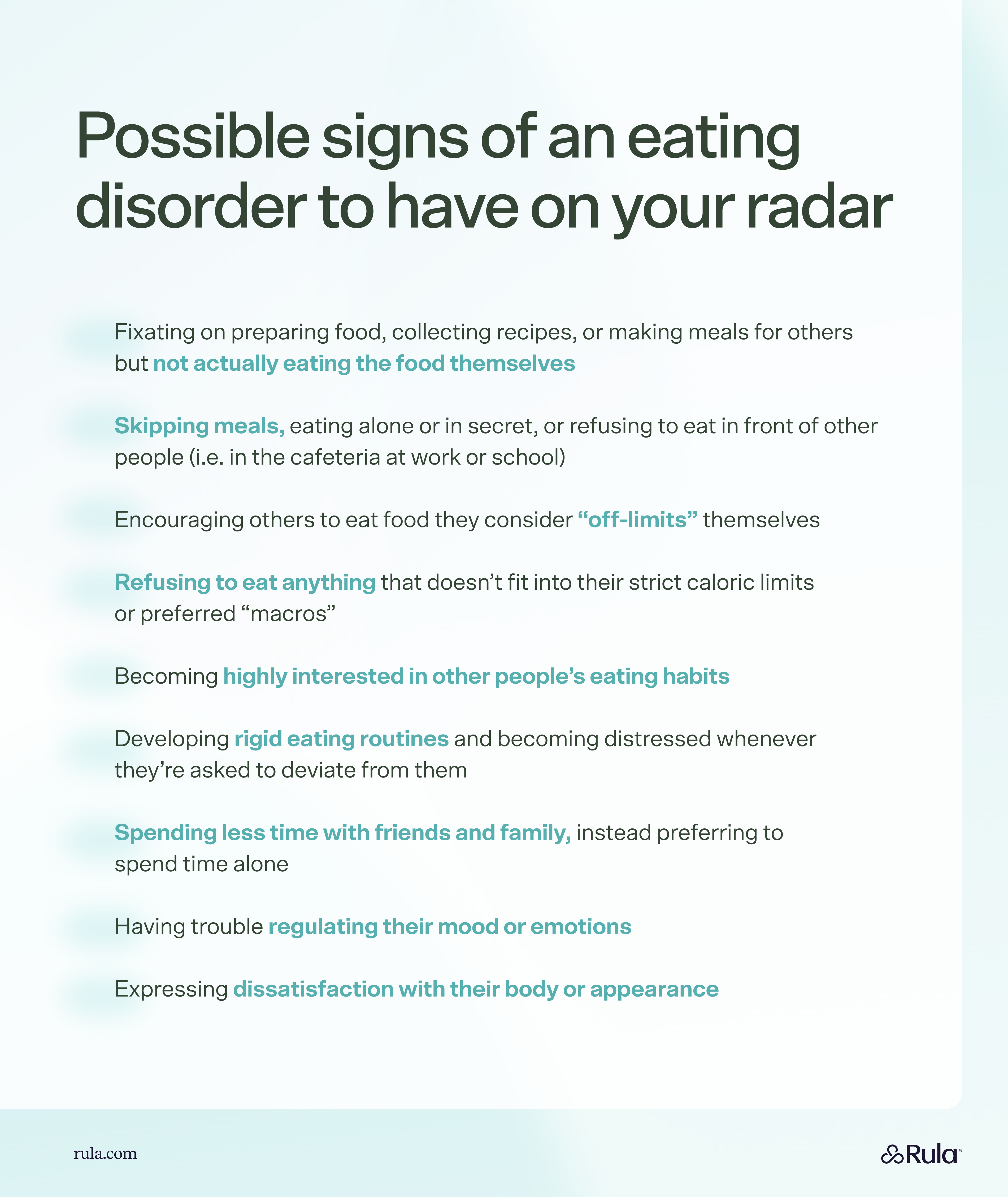


fizkes // Shutterstock Eating disorders like anorexia nervosa, bulimia, binge eating disorder, or BED, and orthorexia are serious, potentially life-threatening mental health conditions. They’re also common, affecting around nine percent of U.S. adults and 22% of children and teens worldwide. Left untreated, an eating disorder can significantly damage a person’s mental and physical well-being. However, through early detection and intervention, these negative effects can be minimized. Eating disorder symptoms can be subtle and difficult to detect, especially in the beginning. But by learning to spot the early warning signs in yourself or others, you’ll know when to seek professional help, Rula notes. Key Takeaways Symptoms of an eating disorder can be difficult to detect. Familiarizing yourself with the early signs can help you get the support you need before symptoms escalate. Dieting or trying to lose weight doesn’t necessarily mean that someone has an eating disorder. But if a person begins eating in secret, adopting rigid routines, or withdrawing socially, it could be cause for concern. If you suspect a friend or family member has an eating disorder, prepare to address your concerns with sensitivity. Let them know that you’re worried, provide nonjudgmental support, and offer to help them access treatment. How signs of an eating disorder can start subtly Evidence of diet culture is all around us. From celebrity-endorsed diet-and-exercise routines to rampant #thinspo on social media, we’re surrounded by images of edited, idealized bodies. The pressure to achieve and maintain an unrealistic beauty standard can feel relentless, and, for some people, this can contribute to the onset of an eating disorder. An eating disorder can start slowly, and it can be difficult to tell whether someone is trying to make healthier choices (i.e. cutting back on processed foods as suggested by their doctor) or engaging in disordered eating habits (i.e. cutting out entire food groups or severely restricting their caloric intake). Understanding these subtle differences can help you identify the possible signs of an eating disorder in yourself and others. Possible signs of an eating disorder to have on your radar
Recognizing the warning signs of an eating disorder