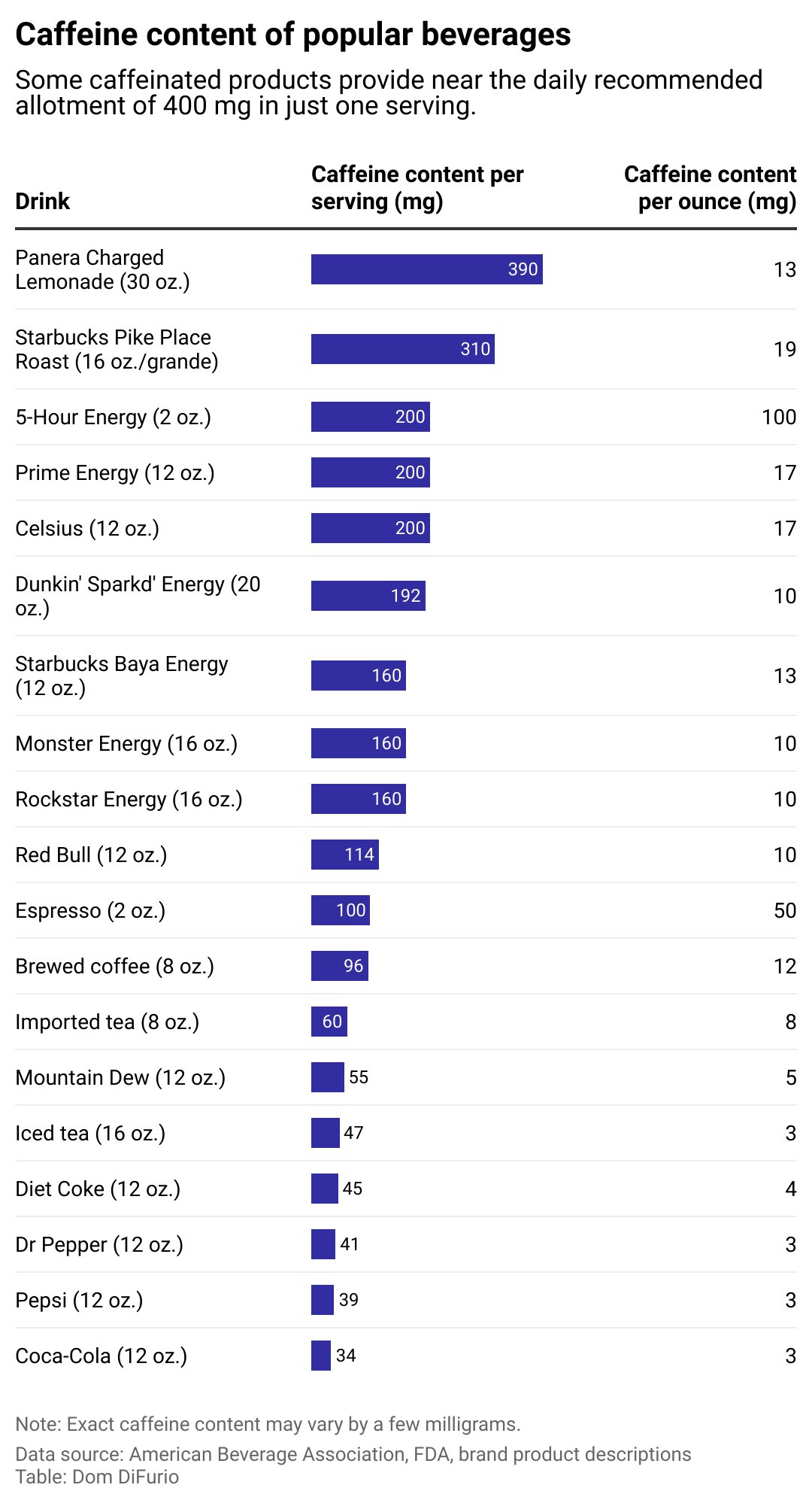


Ash Pollard // Shutterstock Caffeine is the world’s most used drug, with an overwhelming majority (88%) of Americans saying they consume caffeine. Of those who do, about 4 out of 5 say they consume caffeine on a daily basis, while nearly half consume it multiple times throughout the day, according to March survey data released by the International Food Information Council. Yet only 6% of those surveyed were aware that the Food and Drug Administration recommends 400 milligrams as the safe allotment of caffeine to ingest in a single day. That’s the equivalent of about four 8-ounce cups of coffee brewed at home–or just one Charged Lemonade from Panera Bread. Panera’s infamous and highly caffeinated Charged Lemonade drink first debuted in 2022 as part of the fast-casual bakery’s subscription drink program with unlimited refills, allowing customers to drink as much as they chose. In May, Panera announced the drink would be phased out of restaurants after allegedly contributing to several deaths and generating multiple lawsuits. However, the market forces that influenced its addition to the menu in the first place remain, and more fast food brands are announcing new, caffeinated drinks. Over the last decade, energy drinks have been one of the fastest-growing beverage categories for companies, signaling consumers can’t get enough of them. In a sign these drinks may become more common at quick service restaurants, Dunkin’ announced one of its own in February called Sparkd’. Caffeine is among the most studied drugs. But how much do consumers know about the caffeine they’re putting in their bodies? Top Nutrition Coaching analyzed data from the International Food Information Council, the Department of Agriculture, the Mayo Clinic, and various beverage companies to illustrate the caffeine contents of popular drinks as new caffeinated beverages snag headlines for their risks. Everyone’s caffeine sensitivity varies, and certain populations, including pregnant people, should keep their caffeine intake even lower than the recommended 400 mg. Caffeine can make a person irritable and anxious, cause sleep problems, and result in a fast heartbeat. It has been linked to other health issues, and in rare cases, potential for death, according to the Mayo Clinic. Caffeine is relatively safe to consume in controlled amounts. But the risks are heightened when consumed without knowledge of how much caffeine is entering the body, or when mixed with alcohol and other drugs. Sometimes, ambiguous advertising or disclosures make it difficult to discern just how much you’re consuming–as some of the lawsuits leveled against Panera have alleged. Newer beverages–and marketing tactics–push limits of daily intake
New caffeinated drinks are hitting restaurants. Do you know how much caffeine is too much?