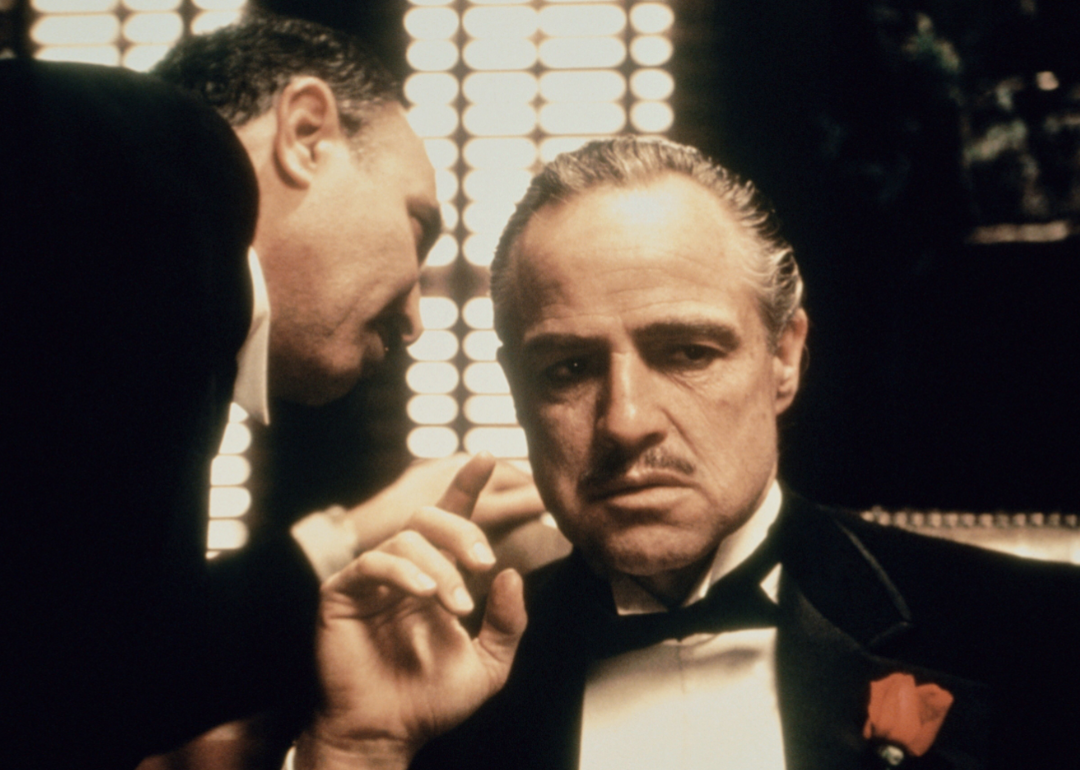


Popperfoto // Getty Images Audiences have been enraptured by cinema since 1895 when Auguste and Louis Lumière used a cinematograph machine to project moving images onto a screen. Naturally, movies have come a long way since the early days of 50-second reels, resulting in a rich variety of styles–many of which are easily streamed right from home. Every cinematic era has put forth its respective slate of timeless masterpieces. The best movies arguably represent the pinnacle of artistic achievement in the modern era and that makes them worth celebrating over and over again. To explore the 100 best films of all time, Stacker analyzed IMDb ratings and Metascores to create a score equally weighting the two. To qualify, each movie needed at least 20,000 votes on IMDb and a Metascore. Ties were broken by IMDb user votes. Films of all languages and from all countries were considered. Great films usually deliver the goods on multiple fronts. That means everything from the writing to the music to the acting is memorable, if not downright iconic. At the end of the day, of course, there is no one solitary answer as to what makes a great movie–just like there is no one type of great film. Counting down from #100, here are the best movies of all time. You may also like: Why these famous films were banned around the globe #100. Moonlight (2016) A24 – Director: Barry Jenkins – Stacker score: 90.1 – Metascore: 99 – IMDb user rating: 7.4 – Runtime: 111 minutes Divided into three segments, this prescient drama follows young Chiron (Ashton Sanders) on his path to self-discovery. Brought to life with vivid color and precision, the story grapples with themes of poverty and identity. “Moonlight” won three Academy Awards, including Best Picture. Mahershala Ali made history as the first Muslim to win an acting Oscar. #99. The Best of Youth (2003) BiBi Film – Director: Marco Tullio Giordana – Stacker score: 90.6 – Metascore: 89 – IMDb user rating: 8.5 – Runtime: 366 minutes “The Best of Youth” follows middle-class Italian brothers Nicola (Luigi Lo Cascio) and Matteo (Alessio Boni) over nearly 40 years, as they come of age and search for meaning amid post-World War II upheaval. Because of its lengthy runtime, the film was released as a pair of three-hour films. It won the “Prize Un Certain Regard” at the 2003 Cannes Film Festival. As film critic Peter Bradshaw notes, “The Best of Youth” is a notable example of Italian films that track history through an extensive family saga. Other examples include “The Leopard” and “Rocco and His Brothers.” #98. Yi Yi (2000) 1+2 Seisaku Iinkai – Director: Edward Yang – Stacker score: 90.6 – Metascore: 93 – IMDb user rating: 8.1 – Runtime: 173 minutes This generational Taiwanese drama follows the plight of engineer NJ (Wu Nien-jen), and how his actions affect three generations of his middle-class family. Director Edward Yang received particular acclaim for “Yi Yi,” taking home Best Director at the 2000 Cannes Film Festival for the film. Its Chinese title can be translated to the phrase “one by one,” or “one after another.” #97. Umberto D. (1952) Rizzoli Film – Director: Vittorio De Sica – Stacker score: 90.6 – Metascore: 92 – IMDb user rating: 8.2 – Runtime: 89 minutes In this Italian film, elderly Rome resident Umberto Domenico Ferrari (Carlo Battisti) and his beloved dog Flike face eviction and the prospect of poverty. Desperate to evade threats from his landlady (Lina Gennari), Domenico fakes illness in order to stay at his hospital, leaving Flike behind with the landlady’s compassionate maid. Although Italians found the movie too critical so soon after World War II, it’s since attained a legacy as one of the great Italian films. #96. Jules and Jim (1962) Cinédis – Director: François Truffaut – Stacker score: 90.6 – Metascore: 97 – IMDb user rating: 7.7 – Runtime: 105 minutes This prime example of French new wave cinema tells the story of an ill-fated love triangle between Frenchman Jim (Henri Serre), his Austrian friend Jules (Oskar Werner), and Jules’ eventual wife Catherine (Jeanne Moreau). “Jules and Jim” is loosely based on the 1953 autobiographical novel by Henri-Pierre Roché, and Truffaut befriended the author before his eventual death. The movie was an inspiration for Martin Scorsese when making “Goodfellas,” as he admired its “punk attitude.” You may also like: 50 best WWII movies of all time #95. High and Low (1963) Kurosawa Production Co. – Director: Akira Kurosawa – Stacker score: 90.6 – Metascore: 90 – IMDb user rating: 8.4 – Runtime: 143 minutes In “High and Low,” a Japanese executive’s comfortable life is upended when his chauffeur’s son is kidnapped and held for ransom. Soon, his entire family is under threat. The movie is loosely based on the Ed McBain novel “King’s Ransom,” and stands as a strong example of a Japanese police procedural. Criterion describes the movie as “a diabolical treatise on contemporary Japanese society.” #94. The Best Years of Our Lives (1946) The Samuel Goldwyn Company – Director: William Wyler – Stacker score: 90.6 – Metascore: 93 – IMDb user rating: 8.1 – Runtime: 170 minutes In this harrowing 1946 drama, three soldiers struggle to reintegrate into society after returning home from serving in World War II. “The Best Years of Our Lives” was directed by William Wyler, a former Air Force major whose previous war film, “Mrs. Miniver,” is held in similarly high regard. Despite the grim and depressing tone, “The Best Years of Our Lives” was the biggest box office success since 1939’s “Gone With the Wind.” The picture was also one of the first 25 films selected by the Library of Congress for preservation in the National Film Registry in 1989. #93. Ikiru (1952) Toho Company – Director: Akira Kurosawa – Stacker score: 90.6 – Metascore: 91 – IMDb user rating: 8.3 – Runtime: 143 minutes In “Ikiru,” a Tokyo bureaucrat searches for meaning after being diagnosed with terminal cancer and struggling to maintain a relationship with his son. The film was partially inspired by Russian writer Leo Tolstoy’s novella “The Death of Ivan Ilyich.” However, Kurosawa also uses “Ikiru” to critique issues like contemporary Japanese bureaucracy and the decay of the traditional Japanese family structure, while remaining a poignant exploration of what it means to be alive. #92. Pinocchio (1940) Walt Disney Studios – Directors: Norman Ferguson, T. Hee, Wilfred Jackson, Jack Kinney, Hamilton Luske, Bill Roberts, Ben Sharpsteen – Stacker score: 90.6 – Metascore: 99 – IMDb user rating: 7.5 – Runtime: 88 minutes With a 2022 debut of the live-action remake, it’s the perfect time to revisit this original Disney classic. The studio’s second full-length animated effort, “Pinocchio” was something of a financial disappointment upon its initial release. Even so, the movie was one of the earliest animated features to win a major Oscar, including Best Music, Original Score and Best Music, Original Song. Thanks to theatrical re-releases and home video rentals and sales, the film eventually grossed more than $100 million. #91. Paths of Glory (1957) Bryna Productions – Director: Stanley Kubrick – Stacker score: 90.6 – Metascore: 90 – IMDb user rating: 8.4 – Runtime: 88 minutes Although iconic director Stanley Kubrick addressed themes of war in many of his films, he arguably addressed it most potently in 1957’s “Paths of Glory.” The anti-war drama stars Kirk Douglas as Colonel Dax, a French commanding officer who defends his soldiers from martial charges of cowardace after they refuse to partake in a suicide mission. Loosely based on the true story of the Souain corporals affair of 1915, “Paths of Glory” was initially censored in several places–such as Switzerland and France–for its critique of the casual cruelty of war. You may also like: Can you guess which iconic movie these scenes are from? #90. Manchester by the Sea (2016) Amazon Studios – Director: Kenneth Lonergan – Stacker score: 90.6 – Metascore: 96 – IMDb user rating: 7.8 – Runtime: 137 minutes Dramas don’t get much more somber than this one from acclaimed writer and director Kenneth Lonergan. In the film, a brooding handyman (Casey Affleck) is given guardianship over his 16-year-old nephew and thereby forced to confront some traumatic demons from his own past. Michelle Williams co-stars and turns in one of her finest performances. The film took home two Academy Awards, including one for Affleck as Best Actor, as well as Best Original Screenplay. #89. Chinatown (1974) Paramount Pictures – Director: Roman Polanski – Stacker score: 90.6 – Metascore: 92 – IMDb user rating: 8.2 – Runtime: 130 minutes This noir-ish thriller takes place in 1937 and centers on a private investigator J.J. “Jake” Gittes (Jack Nicholson), who gets embroiled in a vicious scheme involving the water supply in Los Angeles. Frequently pointed to as an absolute masterclass in filmmaking, the movie delivers taut writing, exceptional acting, and an ending that goes straight to the bone. Faye Dunaway and John Huston co-star. Despite garnering an impressive 11 Oscar nominations, the film only took home one, for Best Original Screenplay. #88. Spotlight (2015) Participant Media – Director: Tom McCarthy – Stacker score: 90.6 – Metascore: 93 – IMDb user rating: 8.1 – Runtime: 129 minutes In this award-winning drama, Boston Globe reporters uncover a child abuse scandal involving the local Catholic archdiocese. Not only is the film based on a true story, but a number of real-life Boston Globe journalists were on hand as consultants. Reportedly, Walter Robinson even said of his on-screen counterpart, “If Michael Keaton robbed a bank, the police would quickly have me in handcuffs.” The film received six Academy Award nominations, stealing away with Best Picture and Best Original Screenplay. #87. La La Land (2016) Summit Entertainment – Director: Damien Chazelle – Stacker score: 90.6 – Metascore: 94 – IMDb user rating: 8 – Runtime: 128 minutes Modernizing the traditional musical, “La La Land” takes place in the city of dreams, and tells the story of two aspiring artists, one a musician (Ryan Gosling) and the other an actress (Emma Stone). Kicking the film off on a high note is a six-minute song-and-dance number that goes down in the middle of freeway traffic. Filming the scene took two days and involved stitching three consecutive shots together to create what appeared to be a single take. Among the movie’s 14 Academy Award nominations, Stone took home the Best Actress Oscar for her portrayal in the film, and Damien Chazelle for Best Director, making him the youngest winner at 32. #86. Alien (1979) Twentieth Century-Fox Productions – Director: Ridley Scott – Stacker score: 90.6 – Metascore: 89 – IMDb user rating: 8.5 – Runtime: 117 minutes The sparring between warrant officer Ellen Ripley (Sigourney Weaver) and the Alien spawned a franchise that included three sequels, two crossover films, and three prequels. “Alien: Awakening” is a long-gestating follow-up prequel. The otherworldly genesis tale–and all its associated hijinks–has all the ingredients for a riveting, sci-fi action saga. In 2002, the movie was selected by the Library of Congress for preservation in the National Film Registry. You may also like: 100 best fantasy movies of all time #85. No Country for Old Men (2007) Paramount Vantage – Directors: Ethan Coen, Joel Coen – Stacker score: 90.6 – Metascore: 92 – IMDb user rating: 8.2 – Runtime: 122 minutes Filmmaking duo the Coen brothers didn’t let the dense prose of Cormac McCarthy inhibit them from faithfully adapting “No Country for Old Men.” In the 2007 film, a man (Josh Brolin) comes upon $2 million in missing drug money and soon finds himself being hunted by a ruthless killer (Javier Bardem). For the most part, the movie stays true to the source material, while terrific performances bring every character even further to life. “No Country for Old Men” won four Oscars at the 80th Academy Awards, including Best Picture. #84. The Dark Knight (2008) Warner Bros. Entertainment Inc. – Director: Christopher Nolan – Stacker score: 90.6 – Metascore: 84 – IMDb user rating: 9 – Runtime: 152 minutes More than just the gold standard of comic book adaptations, “The Dark Knight” holds the #4 spot on the list of IMDb’s Highest Rated Titles. As the second film in Christopher Nolan’s heralded Dark Knight trilogy, it sees Christian Bale returning as the caped crusader and squaring off against Heath Ledger’s Joker. According to legend, Ledger drew inspiration from bands like The Sex Pistols and movies like “A Clockwork Orange” while preparing for the role. Among its eight Oscar nominations, “The Dark Knight” took home the awards for Best Sound Editing and Best Supporting Actor, posthumously awarded to Ledger. #83. The Shawshank Redemption (1994) Castle Rock Entertainment – Director: Frank Darabont – Stacker score: 90.6 – Metascore: 81 – IMDb user rating: 9.3 – Runtime: 142 minutes Even decades after its release, “The Shawshank Redemption” still holds a top spot on IMDb’s list of Highest Rated Titles. Here on Stacker’s list, it doesn’t necessarily fare as well, but that’s not to say the film is anything short of spectacular. Based on a novella by Stephen King, it tells the story of Andy Dufresne (Tim Robbins), a banker convicted of his wife’s murder who grapples with decades of prison life starting in the mid-1940s. Helping him cope is a fellow inmate named Red (Morgan Freeman). In 2015, the Library of Congress chose the film for preservation in the National Film Registry. #82. Anatomy of a Murder (1959) Columbia Pictures – Director: Otto Preminger – Stacker score: 91.1 – Metascore: 95 – IMDb user rating: 8 – Runtime: 161 minutes Otto Preminger’s epic courtroom drama follows lawyer Paul Biegler (James Stewart) as he tries to clear Army Lt. Manion (Ben Gazzara) for the murder of an innkeeper Manion’s wife (Lee Remick) said raped her. In 2012, the film was selected for preservation in the National Film Registry by the Library of Congress. The film is based on the 1958 book by the same name, written by Michigan Supreme Court Justice John D. Voelker (pen name: Robert Traver), which is a fictionalized account of the real-life trial. #81. The Philadelphia Story (1940) Metro-Goldwyn-Mayer – Director: George Cukor – Stacker score: 91.1 – Metascore: 96 – IMDb user rating: 7.9 – Runtime: 112 minutes Starring Cary Grant, Katharine Hepburn, and James Stewart, this 1940 classic takes place days before socialite Tracy Lord (Hepburn) is set to remarry a stuffed-shirt millionaire. Things seem to be running smoothly enough until Lord’s ex-husband (Grant) and a reporter (Stewart) enter the picture and respectively express feelings for her. What ensues is an Old Hollywood romantic comedy of the highest order. The film took home two of the six Academy Awards for which it was nominated, including James Stewart for Best Actor and Donald Ogden Stewart for Best Adapted Screenplay. You may also like: 25 iconic closing shots from film history #80. La Dolce Vita (1960) Riama Film – Director: Federico Fellini – Stacker score: 91.1 – Metascore: 95 – IMDb user rating: 8 – Runtime: 174 minutes Spanning nearly three hours, “La Dolce Vita” functions as an early critique of gossip and celebrity culture via mid-20th century Rome. The film follows celebrity reporter Marcello Rubini (Marcello Mastroianni) as he lurks in the periphery of the spotlight, caught between his questionable professional tendencies and his own sneaking suspicion that the glamorous upper class isn’t all it’s cut out to be. “La Dolce Vita” was nominated for four Oscars: Best Director, Best Original Screenplay, Best Costume Design, and Best Art Direction, winning for Costume Design. #79. The Man Who Shot Liberty Valance (1962) Paramount Pictures – Director: John Ford – Stacker score: 91.1 – Metascore: 94 – IMDb user rating: 8.1 – Runtime: 123 minutes Director John Ford and actor John Wayne collaborated on several celebrated movies, including this one from 1962. In the film, a senator (James Stewart) returns to the town where he once famously shot a man named Liberty Valance. Or did he? As he recounts the tale, it’s revealed that a gunslinger named Tom Doniphon (John Wayne) might be the story’s true hero. “The Man Who Shot Liberty Valance” was selected for preservation in the National Film Registry by the Library of Congress in 2007. #78. Yojimbo (1961) Kurosawa Production Co. – Director: Akira Kurosawa – Stacker score: 91.1 – Metascore: 93 – IMDb user rating: 8.2 – Runtime: 110 minutes This legendary samurai film stars Toshiro Mifune as a nameless, masterless samurai who takes refuge in a village where two powerful businessmen are warring over the local gambling scene. When the samurai offers to serve as bodyguard for both of them, the tension reaches a boiling point. “Yojimbo” was remade twice as a Western–by Walter Hill in 1996 as “Last Man Standing,” and Sergio Leone in 1964 as “A Fistful of Dollars.” #77. It’s a Wonderful Life (1946) Liberty Films – Director: Frank Capra – Stacker score: 91.1 – Metascore: 89 – IMDb user rating: 8.6 – Runtime: 130 minutes This 1946 classic might make for ideal holiday viewing, but the truth is there’s never a wrong time to watch it. Directed by Frank Capra and starring James Stewart, “It’s a Wonderful Life” shows a businessman (Stewart) what life would have been like had he never existed. To think, the movie itself wouldn’t exist had a frustrated writer named Philip Van Doren Stern not sent his rejected short story out as a Christmas card to all his friends and loved ones. The classic earned five Academy Award nominations, including Best Picture. #76. Beauty and the Beast (1991) Walt Disney Productions – Directors: Gary Trousdale, Kirk Wise – Stacker score: 91.1 – Metascore: 95 – IMDb user rating: 8 – Runtime: 84 minutes The 2017 live-action remake of “Beauty and the Beast” might have raked in a large sum at the box office, but it’s the 1991 animated version that holds up as a bona fide work of art. Released by Disney amid a major comeback, the film tells a tale as old as time. It’s about a young prince who’s doomed to exist as a beast unless he can earn the love of his captive and thereby reverse the spell. It’s a charming movie, provided one doesn’t think too hard about the somewhat disturbing implications. The film made history when it became the first animated film to be nominated for the Oscar for Best Picture at the 64th Academy Awards. You may also like: Mistakes from the 50 best movies of all time #75. There Will Be Blood (2007) Paramount Vantage – Director: Paul Thomas Anderson – Stacker score: 91.1 – Metascore: 93 – IMDb user rating: 8.2 – Runtime: 158 minutes Loosely inspired by an Upton Sinclair novel, this Paul Thomas Anderson drama follows oilman Daniel Plainview (Daniel Day-Lewis) as he rises to power at the turn of the century. One of the few things getting in Plainview’s way is a local pastor named Eli, played brilliantly by Paul Dano. As the two figures clash repeatedly, the film itself becomes a gripping study of ambition and exploitation. The film took home two of the eight Oscars for which it was nominated, including Best Actor and Best Cinematography. #74. Toy Story 3 (2010) Walt Disney Pictures – Director: Lee Unkrich – Stacker score: 91.1 – Metascore: 92 – IMDb user rating: 8.3 – Runtime: 103 minutes Woody (voiced by Tom Hanks) and the gang are back for the third installment in the Toy Story franchise. This time around, Andy is college-bound, and hence a little too old to play with toys. Following his negligence, the toys end up at a local day care center, where the children are ruthless, and an evil bear named Lotso runs the show at night. Years after earning $1.067 billion worldwide, “Toy Story 3” was followed by the 2019 sequel, “Toy Story 4,” which grossed $1.073 billion. #73. The Lord of the Rings: The Two Towers (2002) New Line Cinema – Director: Peter Jackson – Stacker score: 91.1 – Metascore: 87 – IMDb user rating: 8.8 – Runtime: 179 minutes Next to the Star Wars saga, Peter Jackson’s Lord of the Rings trilogy, and the subsequent Hobbit prequels, endures as one of the most celebrated franchises of all time. In this 2002 installment, Frodo and Sam continue their journey to Mordor, in hopes of destroying an all-powerful ring. Joining them for the trip is a shifty creature named Gollum, who has plans of his own. The movie garnered six nominations at the 75th Academy Awards, winning for Best Sound Editing and Best Visual Effects. #72. Au hasard Balthazar (1966) Argos Films – Director: Robert Bresson – Stacker score: 91.7 – Metascore: 98 – IMDb user rating: 7.8 – Runtime: 95 minutes Partially inspired by a passage from Fyodor Dostoevsky’s novel “The Idiot,” this meditative film follows Balthazar, the beloved pet donkey of young farm girl Marie (Anne Wiazemsky). When the two are separated, their lives mirror each other in curious ways, as they endure cruelty from others and search for small moments of beauty and peace. Director Jean-Luc Godard famously described “Au hasard Balthazar” as “the world in an hour and a half,” noting its empathetic, elliptical tale about the relentless cycle of life. #71. The Shop Around the Corner (1940) Metro-Goldwyn-Mayer (MGM) – Director: Ernst Lubitsch – Stacker score: 91.7 – Metascore: 96 – IMDb user rating: 8 – Runtime: 99 minutes In this classic rom-com, Jimmy Stewart and Margaret Sullavan play Alfred and Klara, employees at a Budapest general store with a bitter rivalry. Unbeknownst to them, they’re falling for each other as anonymous pen pals. “The Shop Around the Corner” was the inspiration for Nora Ephron’s iconic 1998 film “You’ve Got Mail,” in which the premise is updated to include email. You may also like: 100 best American movies of all time #70. The Adventures of Robin Hood (1938) Warner Bros. – Directors: Michael Curtiz, William Keighley – Stacker score: 91.7 – Metascore: 97 – IMDb user rating: 7.9 – Runtime: 102 minutes The story of Robin Hood has been adapted for the big screen multiple times since the dawn of cinema, but it’s this 1938 version that ranks as the best one, according to fans and critics alike. Famously starring Errol Flynn in the title role, the movie sees Robin Hood leading the resistance against an oppressive king. Not only was the film a massive success upon its initial release, but it raked in even more cash after being re-released in technicolor 10 years later. In 1995, the movie was selected for preservation by the National Film Registry. #69. The Lady Vanishes (1938) Gainsborough Pictures – Director: Alfred Hitchcock – Stacker score: 91.7 – Metascore: 98 – IMDb user rating: 7.8 – Runtime: 96 minutes “The Lady Vanishes” was the film that secured Alfred Hitchcock’s fruitful career in Hollywood, as he moved from England to the United States shortly after its success. The movie stars Margaret Lockwood as Iris, a young woman who’s startled to discover that the older woman (May Whitty) she befriended on a train journey has vanished. When almost no one else on the train seems to believe her, Iris sets out to investigate the mystery with her soon-to-be-paramour and fellow traveler Gilbert (Michael Redgrave). #68. 4 Months, 3 Weeks and 2 Days (2007) Mobra Films – Director: Cristian Mungiu – Stacker score: 91.7 – Metascore: 97 – IMDb user rating: 7.9 – Runtime: 113 minutes “4 Months, 3 Weeks and 2 Days” propelled Romanian director Cristian Mungiu to international prominence, as his movie won the Palme d’Or at the Cannes Film Festival. The film takes place in 1987, as roommates Otilia (Anamaria Marinca) and G bi a (Laura Vasiliu) attempt to secure an illegal abortion for G bi a under a restrictive Romanian dictatorship. Although it was shut out of the Academy Awards, Mungiu’s film remains an unfortunately timely portrayal of women fighting for bodily autonomy against the backdrop of fascism. #67. My Left Foot (1989) Miramax – Director: Jim Sheridan – Stacker score: 91.7 – Metascore: 97 – IMDb user rating: 7.9 – Runtime: 103 minutes Daniel Day-Lewis won his first Academy Award for his portrayal of real-life Irishman Christy Brown, a working-class man with cerebral palsy who became a well-known artist. Based on Brown’s 1954 memoir of the same name, “My Left Foot” received five Oscar nominations, with Day-Lewis and co-star Brenda Fricker taking home acting trophies. A notorious method actor, Day-Lewis refused to do anything Brown wouldn’t do, living in a wheelchair and asking crew members for help eating. #66. The Wild Bunch (1969) Warner Brothers/Seven Arts – Director: Sam Peckinpah – Stacker score: 91.7 – Metascore: 97 – IMDb user rating: 7.9 – Runtime: 135 minute. All-stars Ernest Borgnine, William Holden, and Robert Ryan deliver stunning performances as outlaws past their prime in this timeless Western that was nominated for two Oscars. The film about men trying to contend with the ever-evolving world around them caused a stir for its raw depictions of survival and what was then considered gratuitous violence. The film was nominated for two Academy Awards, including Best Original Score and Best Original Screenplay. You may also like: Incredible filming locations from popular movies #65. Portrait of a Lady on Fire (2019) Lilies Films – Director: Céline Sciamma – Stacker score: 91.7 – Metascore: 95 – IMDb user rating: 8.1 – Runtime: 122 minutes In Céline Sciamma’s revelatory romantic drama “Portrait of a Lady on Fire,” female painter Marianne (Noémie Merlant) is commissioned to paint a covert wedding portrait of headstrong, resistant bride-to-be Héloïse (Adèle Haenel) in 18th-century Brittany. However, the two soon embark on a romance, challenging antiquated beliefs about the artist versus muse relationship, and the passionate, sometimes liberating act of looking. “Portrait of a Lady on Fire” won the Queer Palm at the 2019 Cannes Film Festival, marking the first time a film directed by a woman won the award. #64. A Streetcar Named Desire (1951) Warner Bros. – Director: Elia Kazan – Stacker score: 91.7 – Metascore: 97 – IMDb user rating: 7.9 – Runtime: 122 minutes A renowned play by Tennessee Williams leaped onto the big screen in 1951, with Elia Kazan helming, and Marlon Brando and Vivien Leigh tackling the respective lead roles. In the film, a troubled woman named Blanche DuBois (Leigh) moves in with her sister Stella (Kim Hunter), only to find herself at odds with Stella’s brutish husband, Stanley (Brando). This is one of only two films in history to win three Academy Awards for acting. Additionally, the blockbuster, which banked an estimated $4.25 million at the box office, also garnered Brando his fourth consecutive Oscar nomination for Best Actor. #63. Rosemary’s Baby (1968) William Castle Enterprises – Director: Roman Polanski – Stacker score: 91.7 – Metascore: 96 – IMDb user rating: 8 – Runtime: 137 minutes A true exercise in terror, this 1968 film stars Mia Farrow as Rosemary, a woman who goes to sleep one night and wakes up pregnant the next day. As many sinister events unfold around her, Rosemary realizes her feverish nightmare on the night in question wasn’t a nightmare after all and that she might be carrying the spawn of Satan himself. Making the creepy premise that much creepier is some haunting theme music from Krzysztof Komeda. In 2014, the cult horror classic was selected by the Library of Congress for preservation in the National Film Registry. #62. Inside Out (2015) Disney/Pixar – Directors: Pete Docter, Ronnie Del Carmen – Stacker score: 91.7 – Metascore: 94 – IMDb user rating: 8.2 – Runtime: 95 minutes Representing yet another home run from Pixar, this 2015 animated feature primarily takes place within the mind of a young girl named Riley. After Riley’s family moves to a new city, she suffers a range of emotions, each personified by a specific character. As Riley seeks mental balance in her new surroundings, her emotions embark on a harrowing journey of epic proportion. Featured in the film are the voices of comedic talents like Amy Poehler, Bill Hader, Mindy Kaling, and Lewis Black. The film became the seventh highest-grossing film of 2015, raking in $858.8 million worldwide. #61. Taxi Driver (1976) Columbia Pictures Corporation – Director: Martin Scorsese – Stacker score: 91.7 – Metascore: 94 – IMDb user rating: 8.2 – Runtime: 114 minutes One of Martin Scorsese’s earliest masterpieces, this 1976 film follows a mentally unbalanced taxi driver named Travis Bickle (Robert De Niro), whose pent up disgust with New York City slowly devolves into violence. Co-starring as a 12-year-old prostitute is Jodie Foster in one of her most challenging roles. According to legend, screenwriter Paul Schrader made numerous revisions to Foster’s character after meeting an underage prostitute in real life. In 1994, the film was chosen for preservation in the National Film Registry. You may also like: 100 best Western films of all time #60. Star Wars: Episode IV–A New Hope (1977) Lucasfilm Ltd. – Director: George Lucas – Stacker score: 91.7 – Metascore: 90 – IMDb user rating: 8.6 – Runtime: 121 minutes The biggest franchise in cinematic history started with this groundbreaking space epic, which introduced audiences to Luke Skywalker, Princess Leia, Han Solo, Obi-Wan Kenobi, and Darth Vader. Inspired by everything from Kubrick’s “2001: A Space Odyssey” to the works of philosopher Joseph Campbell, George Lucas unleashed a fully realized world and one that’s still unfolding by way of new installments. Ultimately, this is a franchise so impactful that there might one day be an actual Millennium Falcon flying through space, if only because some genius “Star Wars” fan made it happen. The film was selected by the Library of Congress for preservation in the National Film Registry in 1989. #59. Quo Vadis, Aida? (2020) Deblokada Produkcija – Director: Jasmila Zbanic – Stacker score: 92.2 – Metascore: 97 – IMDb user rating: 8 – Runtime: 101 minutes “Quo Vadis, Aida?” retells the 1995 Srebrenica Massacre through the eyes of Aida (Jasna uric ic ), a Bosnian translator who finds herself torn between duty and family as tragedy unfolds. Variety critic Jessica Kiang writes that the film “works to un-revise history, re-centering the victims’ plight as the eye of a storm of evils.” “Quo Vadis, Aida?” was nominated for Best International Feature Film at the 2021 Academy Awards. #58. Battleship Potemkin (1925) Goskino – Director: Sergei Eisenstein – Stacker score: 92.2 – Metascore: 97 – IMDb user rating: 8 – Runtime: 66 minutes This silent Soviet film takes place during the Russian Revolution of 1905, as the crew of the battleship Potemkin rebel against their tyrannical officers. In the most recent Sight & Sound critics poll, “Battleship Potemkin” ranked #11 in its list of the top 100 films of all time. Many influential directors, such as Orson Welles and Michael Mann, have also cited it as one of their favorite movies. #57. The Battle of Algiers (1966) Casbah Film – Director: Gillo Pontecorvo – Stacker score: 92.2 – Metascore: 96 – IMDb user rating: 8.1 – Runtime: 121 minutes Shot on location in a newsreel style, “The Battle of Algiers” recreates a key year in the Algerian struggle for freedom from French occupation in the 1950s and 1960s. It serves as a case study and critique of the atrocities of modern warfare, particularly urban guerilla warfare. It’s also associated with the style of Italian neorealist film. #56. The Grapes of Wrath (1940) Twentieth Century Fox – Director: John Ford – Stacker score: 92.2 – Metascore: 96 – IMDb user rating: 8.1 – Runtime: 129 minutes Based on the Pulitzer Prize-winning novel by John Steinbeck, this 1940 drama takes place in California’s Dust Bowl at the height of the Great Depression and chronicles the struggles of an impoverished family. In spite of its bleak themes, the movie was both a financial and critical success, winning two Academy Awards. Inspired by the film, famous folk singer Woody Guthrie penned his iconic song “The Ballad of Tom Joad.” Widely regarded as one of the greatest films of all time, the movie was selected for preservation in the National Film Registry in 1989. You may also like: 50 times actors hated their own movies #55. The Maltese Falcon (1941) Warner Bros. – Director: John Huston – Stacker score: 92.2 – Metascore: 97 – IMDb user rating: 8 – Runtime: 100 minutes From the acclaimed novel by Dashiell Hammett came this classic film noir, in which hard-boiled private eye Sam Spade (Humphrey Bogart) outmaneuvers cunning criminals and duplicitous dames while hunting for a priceless statuette. Warner Bros. released two previous versions in the years leading up to this celebrated film, one of them being a comedic misfire. Proving just how legendary this third version remains, a 45-pound prop statuette used in the film sold at auction in 2013 for a whopping $4 million. The Bogart starrer also earned three Academy Award nominations, including one for Best Picture. #54. The Apartment (1960) The Mirisch Corporation – Director: Billy Wilder – Stacker score: 92.2 – Metascore: 94 – IMDb user rating: 8.3 – Runtime: 125 minutes Billy Wilder’s classic rom-com follows the odd world of insurance worker C.C. Baxter (Jack Lemmon), who lets executives at his firm use his apartment for extramarital affairs as a means to move up in the company. All doesn’t go as planned when Baxter’s manager Mr. Sheldrake (Fred MacMurray) brings home the elevator girl from work (Shirley MacLaine) for whom Baxter has feelings of his own. During filming, Wilder only gave MacLaine 40 pages of the script so she wouldn’t find out how the story ended. The film was nominated for 10 awards at the 33rd Academy Awards, winning five, including Best Picture, Best Director, and Best Screenplay. #53. 12 Years a Slave (2013) Estudios Picasso – Director: Guillermo del Toro – Stacker score: 93.8 – Metascore: 98 – IMDb user rating: 8.2 – Runtime: 118 minutes This dark political fable unfolds in the years following the Spanish Civil War, as young Ofelia (Ivana Baquero) copes with the horrors of fascism through the violent actions of her army officer stepfather (Sergi López). At the same time, she discovers a captivating underworld and is sent on a mythic quest through its labyrinth. “Pan’s Labyrinth” won three Academy Awards, and has been praised for its depictions of war and loss of innocence. #24. The Godfather: Part II (1974) Paramount Pictures – Director: Francis Ford Coppola – Stacker score: 93.8 – Metascore: 90 – IMDb user rating: 9 – Runtime: 202 minutes Continuing The Godfather saga to rapturous acclaim and six Academy Awards, this 1974 sequel finds Michael Corleone (Al Pacino) squaring off against a sea of troubles while trying to expand and legitimize his empire. Also depicted is a young Vito Corleone (Robert De Niro), who journeys to the United States from Italy in the early 1900s and ascends to power after murdering the local don. After De Niro won an Academy Award for his performance, he and Marlon Brando became the only two actors in history to win an Oscar for their portrayal of the same character. In 1993, the sequel was selected by the Library of Congress for preservation in the National Film Registry. #23. The Lord of the Rings: The Fellowship of the Ring (2001) New Line Productions – Director: Peter Jackson – Stacker score: 93.8 – Metascore: 92 – IMDb user rating: 8.8 – Runtime: 178 minutes Peter Jackson’s “Lord of the Rings” trilogy kicked off in 2001 with this celebrated installment. After coming into possession of a powerful ring, a hobbit named Frodo (Elijah Wood) and his companions set out to destroy the relic before it ends up in the wrong hands. Hot on their tail is a range of murderous creatures, who will stop at nothing to get their hands on the all-powerful ring. At the 74th Academy Awards, the film was nominated for 13 awards, winning four: Best Cinematography, Best Makeup, Best Original Score and Best Visual Effects. #22. Fanny and Alexander (1982) Svenska Filminstitutet (SFI) – Director: Ingmar Bergman – Stacker score: 94.3 – Metascore: 100 – IMDb user rating: 8.1 – Runtime: 188 minutes Originally intended as legendary Swedish filmmaker Ingmar Bergman’s last film, “Fanny and Alexander” tells the semi-autobiographical tale of two children coming of age in a theatrical Swedish family in the early 1900s. It won four Academy Awards, including Best Foreign Language Film. Bergman described it as the sum total of his life as a filmmaker. #21. Three Colors: Red (1994) Canal+ – Director: Krzysztof Kieslowski – Stacker score: 94.3 – Metascore: 100 – IMDb user rating: 8.1 – Runtime: 99 minutes “Red” centers on a somber Swiss model (Irène Jacob) who discovers a retired judge has been spying on local people’s inner lives, connecting a series of unlikely local dramas. It marks the final film in Krzysztof Kieslowski’s Three Colors trilogy, which examined the trio of French Revolutionary ideals. Red explores the idea of fraternity, as characters who seem completely unrelated find their lives inextricably linked. “Red” received three Academy Award nominations, including Best Director. You may also like: Famous movie quotes from the year you were born #20. Metropolis (1927) Universum Film (UFA) – Director: Fritz Lang – Stacker score: 94.3 – Metascore: 98 – IMDb user rating: 8.3 – Runtime: 153 minutes One of the first feature-length sci-fi films made, “Metropolis” is as influential a genre film as they come. The German silent film takes place in a futuristic city sharply divided by class, as the city planner’s son Freder (Gustav Fröhlich) becomes involved in an effort to unite its divided people. In 2001, it became the first film to be inscribed on UNESCO’s Memory of the World Register. #19. Modern Times (1936) Charles Chaplin Productions – Director: Charles Chaplin – Stacker score: 94.3 – Metascore: 96 – IMDb user rating: 8.5 – Runtime: 87 minutes Charlie Chaplin reprised his role as The Tramp for this 1936 masterpiece, which stuck to silent-era traditions despite being made in the age of talkies. In the film, The Tramp struggles to make ends meet in a highly industrialized world, famously slithering his way through the gears of a machine during one of the era’s most epochal scenes. Chaplin was reportedly inspired to make the film after talking about machinery and technology with Mahatma Gandhi. “Modern Times” was one of the earliest films chosen by the Library of Congress for preservation in the National Film Registry in 1989. #18. North by Northwest (1959) Metro-Goldwyn-Mayer – Director: Alfred Hitchcock – Stacker score: 94.3 – Metascore: 98 – IMDb user rating: 8.3 – Runtime: 136 minutes No list of great films is complete without Alfred Hitchcock, and this 1959 thriller finds the famous director at the top of his game. The movie stars Cary Grant as a New York ad executive, who gets caught up in the world of international espionage after being mistaken for a notorious spy. What follows is an epic struggle for survival, which culminates with a deadly showdown on Mount Rushmore. Regarded as one of the greatest films of all time, “North by Northwest” garnered three Academy Award nominations. #17. Dr. Strangelove or: How I Learned to Stop Worrying and Love the Bomb (1964) Columbia Pictures Corporation – Director: Stanley Kubrick – Stacker score: 94.3 – Metascore: 97 – IMDb user rating: 8.4 – Runtime: 95 minutes Acclaimed director Stanley Kubrick enters the list with 1964’s “Dr. Strangelove or: How I Learned to Stop Worrying and Love the Bomb,” a movie that puts the “dark” in dark comedy. In the film, a series of miscommunications lead to a nuclear showdown between the world’s most powerful nations. As intentionally ridiculous as the movie is, an early version of the script was even more so, with aliens watching the whole fiasco from space. The film garnered four Academy Award nominations, including Best Picture, Best Actor, and Best Director. #16. Parasite (2019) Barunson E&A – Director: Bong Joon Ho – Stacker score: 94.3 – Metascore: 96 – IMDb user rating: 8.5 – Runtime: 132 minutes Upon its 2019 release, “Parasite” managed to distill global unrest over class inequalities into an immensely entertaining thriller. The film tells the story of two Seoul families: one impoverished and posing as employees for the other, who are immensely wealthy. Soon, they become embroiled in a dangerous fight for survival. Hailed as one of the best films of the 21st century thus far, “Parasite” made history when it became the first non-English language film to win Best Picture at the Academy Awards. You may also like: Different movies with the same plots #15. Singin’ in the Rain (1952) Metro-Goldwyn-Mayer (MGM) – Directors: Stanley Donen, Gene Kelly – Stacker score: 94.8 – Metascore: 99 – IMDb user rating: 8.3 – Runtime: 103 minutes Arguably the most celebrated musical of all time, “Singin’ in the Rain” takes place during the rise of talkies and finds the members of a production company struggling to adapt. Not only did Gene Kelly star, co-direct, and choreograph the film, but he performed a song-and-dance number with a temperature of 103 F. Debbie Reynolds co-stars in her breakthrough role as Kathy Selden. In 1989, the movie became one of the first 25 films selected by the Library of Congress for preservation in the National Film Registry. #14. Psycho (1960) Paramount Pictures – Director: Alfred Hitchcock – Stacker score: 94.8 – Metascore: 97 – IMDb user rating: 8.5 – Runtime: 109 minutes Far more than a heralded thriller, 1960’s “Psycho” paved the way for the modern slasher genre, and furthermore upended various mainstream conventions. In telling the story of a murderous hotel owner, Alfred Hitchcock relied on everything from quick cuts to gripping music to a shape-shifting narrative, thereby delivering a completely new cinematic experience. To this day, the famous shower scene is among the most important sequences in movie history. The film was also nominated for four Oscars, and won Janet Leigh the Golden Globe Award for Best Supporting Actress. #13. Spirited Away (2001) Studio Ghibli – Director: Hayao Miyazaki – Stacker score: 94.8 – Metascore: 96 – IMDb user rating: 8.6 – Runtime: 125 minutes Although Japanese animation studio Studio Ghibli has become internationally renowned for their fantastical, deeply human films, “Spirited Away” is widely recognized as the company’s and Hayao Miyazaki’s magnum opus. The movie follows 10-year-old Chihiro (Rumi Hiiragi), who finds herself in a fantasy world ruled by gods and monsters, as she fights to reclaim her identity and reunite with her parents. It became the first non-English language hand-drawn film to win the Oscar for Best Animated Feature. #12. Lawrence of Arabia (1962) Horizon Pictures (II) – Director: David Lean – Stacker score: 95.3 – Metascore: 100 – IMDb user rating: 8.3 – Runtime: 218 minutes Inspired by the life of iconic English officer T.E. Lawrence and his 1963 book “Seven Pillars of Wisdom,” David Lean’s legendary epic stars Peter O’Toole as Lawrence himself. The film tells the story of how he united Arab tribes against the Ottoman Turks during World War II. Widely recognized as one of the most influential movies ever made, it won seven Oscars, including Best Picture. #11. Vertigo (1958) Paramount Pictures – Director: Alfred Hitchcock – Stacker score: 95.3 – Metascore: 100 – IMDb user rating: 8.3 – Runtime: 128 minutes Nothing is as it seems in “Vertigo,” an Alfred Hitchcock classic based on Boileau-Narcejac’s 1954 novel “D’entre les morts” (“From Among the Dead”). In the film, a former police detective (James Stewart) is hired to trail a friend’s wife (Kim Novak) who’s been acting strangely and may be at risk of harming herself. The otherwise mundane gig goes haywire as the private investigator becomes obsessed with the woman and Hitchcock shares his most revelatory, personal production of his career. The classic Hitchcock film was preserved in the National Film Registry in 1989. You may also like: 100 best international movies of all time #10. Citizen Kane (1941) RKO Radio Pictures .- Director: Orson Welles – Stacker score: 95.3 – Metascore: 100 – IMDb user rating: 8.3 – Runtime: 119 minutes Here’s a movie so great that when something else is likewise terrific, that thing is often referred to as the “Citizen Kane” of its respective arena. Accordingly, this 1941 film–which depicts the ambitious rise of newspaper magnate Charles Foster Kane (Orson Welles)–has only gotten better with age. It might no longer retain the #1 spot on lists of the greatest films, including this one, but ask the right cinephiles, and they will likely assert “Citizen Kane” is still the best movie of them all. Despite garnering nine Academy Awards, the film only walked away with one, for Best Original Screenplay. #9. Pulp Fiction (1994) Miramax – Director: Quentin Tarantino – Stacker score: 95.3 – Metascore: 94 – IMDb user rating: 8.9 – Runtime: 154 minutes Quentin Tarantino’s second directorial effort arguably remains his most quintessential work. Interweaving three violent stories–while simultaneously paying homage to a host of influences– “Pulp Fiction” is quite simply the stuff that great cinema is made of. Speaking of influences, the hit film was happy to pay it forward, inspiring a wave of upcoming auteurs. In 2013, “Pulp Fiction” was chosen for preservation in the National Film Registry. #8. City Lights (1931) Charles Chaplin Productions – Director: Charles Chaplin – Stacker score: 95.8 – Metascore: 99 – IMDb user rating: 8.5 – Runtime: 87 minutes Sticking to his well-established roots, Charlie Chaplin released this primarily silent film three years into the talkie era. Rife with signature pantomime, it follows The Tramp (Chaplin) as he resorts to various extremes while trying to make a buck. It all paves the way for one of cinema’s most unforgettable final scenes, during which the story’s underlying pathos is laid bare. Hailed as being one of the greatest and most inspiring films, “City Lights” went on to be preserved by the Library of Congress in the National Film Registry in 1991. #7. Seven Samurai (1954) Toho Company – Director: Akira Kurosawa – Stacker score: 95.8 – Metascore: 98 – IMDb user rating: 8.6 – Runtime: 207 minutes In this three-hour epic, farmers from a village targeted by bandits hire a veteran samurai and his six companions to help defend them. Featuring iconic Japanese actors like Takashi Shimura and Toshiro Mifune, the movie manages to deliver both breathless action and a rich tale of human resilience. It’s also known for its centerpiece battle, when 40 bandits attack the central village. #6. Schindler’s List (1993)
100 best movies of all time